top of page

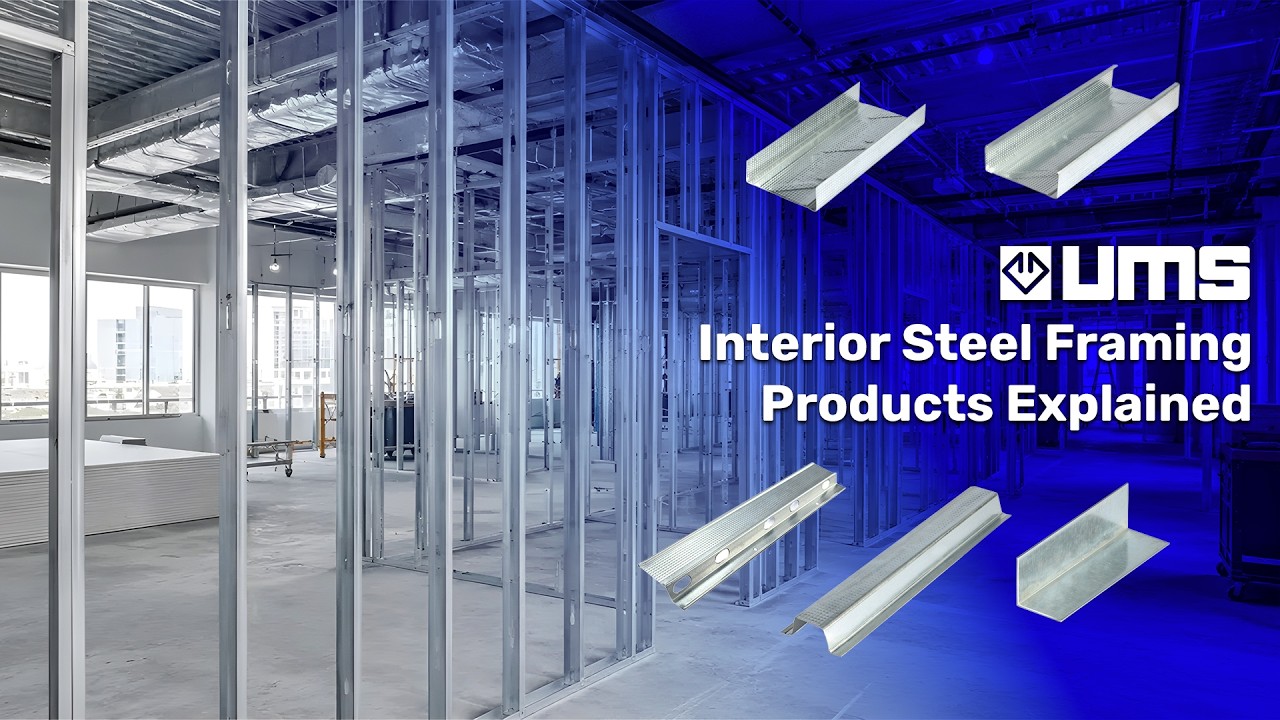
Interior Steel Framing Components Explained
Interior steel framing is not a single product. A complete drywall framing system can include several different steel profiles, each designed to perform a specific function. Studs and tracks create the primary framework, while resilient channels, furring channels, U channels, and long angles address secondary framing, sound isolation, support, and detailing requirements. Here is a practical guide to the six core interior steel framing components and how they fit together. Int
6 days ago5 min read


Common Interior Steel Framing Mistakes and How to Avoid Them
Interior steel framing is widely used for drywall partitions, ceilings, soffits, and other non-load-bearing interior applications. Steel studs and tracks can provide consistent dimensions and efficient installation, but the performance of a framing system depends heavily on correct product selection, layout, installation, and detailing. Even experienced contractors can encounter problems when framing components are selected incorrectly or installed without following the proje
Sep 76 min read


Interior Steel Framing for Apartments: Applications, Benefits & Construction Efficiency
Apartment construction requires interior framing systems that can deliver consistent results across a large number of residential units. Unlike single-family homes, multifamily apartment projects often involve repeated floor plans, similar wall configurations, shared corridors, bathrooms, kitchens, mechanical spaces, and common areas. This makes installation consistency and construction efficiency particularly important. Interior steel framing provides a practical framework f
Sep 26 min read


Interior Steel Framing Guide For School Buildings
Schools and educational facilities require interior spaces that are durable, functional, and adaptable to changing educational needs. Classrooms, corridors, administrative offices, libraries, laboratories, restrooms, and common areas all require carefully designed interior wall and ceiling assemblies. At the same time, school construction projects often involve large floor areas, repeated room layouts, and demanding construction schedules. Interior steel framing provides a pr
Sep 16 min read


Interior Steel Framing for Hospitals: Applications, Benefits & Construction Efficiency
Hospital construction requires interior framing systems that can accommodate complex layouts, extensive building services, and demanding performance requirements. Patient rooms, treatment areas, operating departments, corridors, laboratories, offices, and service spaces all require carefully designed interior wall and ceiling assemblies. At the same time, healthcare projects often involve strict construction schedules and coordination between numerous trades. Interior steel f
Aug 316 min read


Interior Steel Framing for Hotels: Applications, Benefits & Construction Efficiency
Hotel construction requires interior spaces that are consistent, durable, and efficient to build. Guest rooms, corridors, bathrooms, service areas, and common spaces all need carefully planned wall and ceiling assemblies that can meet the functional requirements of the building. Interior steel framing provides a practical framework for creating these spaces. Galvanized steel studs and tracks can be used to construct non-load-bearing partition walls, corridors, suspended ceili
Aug 286 min read


Interior Steel Framing for Offices: Applications, Benefits & Construction Efficiency
Modern office buildings are designed to accommodate changing business needs, evolving workplace layouts, and increasingly complex building services. As a result, interior framing systems need to provide both installation efficiency and the flexibility required to create functional workspaces. Interior steel framing provides a reliable solution for creating non-load-bearing partition walls, meeting rooms, private offices, corridors, suspended ceilings, and other interior drywa
Aug 275 min read


Where Is Interior Steel Framing Used? Applications Across Modern Construction
Introduction Interior steel framing is used across a wide range of modern construction projects, from residential developments and apartment buildings to hospitals, hotels, offices, schools, and commercial facilities. As construction projects become more complex, builders and contractors need framing systems that can be installed efficiently while delivering consistent dimensions, durability, fire performance, and long-term reliability. Galvanized steel framing provides a pra
Aug 136 min read


Top Benefits of Interior Steel Framing for Modern Construction
Interior steel framing has become the preferred solution for drywall construction in many residential, commercial, institutional, and industrial buildings. While traditional wood framing is still widely used, galvanized steel framing continues to gain popularity because of its durability, precision, and long-term performance. Benefits of Interior Steel Framing From partition walls and suspended ceilings to large commercial interiors, steel framing offers practical advantages
Aug 63 min read


Interior Steel Framing vs Wood Framing: Which Is Better for Modern Construction?
Choosing the right framing system is one of the most important decisions in any construction project. While wood framing has been used for decades, interior steel framing has become an increasingly popular solution for residential, commercial, institutional, and industrial buildings. Both systems have their advantages, but galvanized steel framing offers significant benefits in terms of dimensional accuracy, moisture resistance, fire performance, and long-term durability. Thi
Aug 63 min read


What Is Interior Steel Framing? A Complete Guide to Drywall Framing Systems
Interior steel framing is one of the most widely used construction methods for creating non-load-bearing partition walls, ceilings, and drywall assemblies in modern buildings. Compared to traditional wood framing, galvanized steel framing offers superior dimensional accuracy, durability, moisture resistance, and long-term performance. Today, interior steel framing systems are used in residential, commercial, healthcare, educational, hospitality, and industrial projects where
Aug 53 min read
Metal Stud Spacing for Drywall: What Is the Standard?
When installing drywall on a steel framing system, one of the most important factors to consider is metal stud spacing. Proper spacing ensures that drywall panels are securely supported, walls remain stable, and the finished surface stays smooth and durable over time. Understanding the standard spacing for metal studs helps contractors, builders, and project managers achieve reliable and code-compliant results. What Is Metal Stud Spacing? Metal stud spacing refers to the dist
Jul 212 min read


What is an EQ Drywall Track? Understanding Benchmark Interior Framing Tracks
UMS Metal EQ Drywall Track EQ Drywall Tracks are interior steel framing components used in partition wall systems to form the top and bottom boundaries of drywall stud assemblies. The EQ classification refers to industry benchmark performance categories that group steel tracks based on comparable structural and dimensional characteristics. Manufactured from galvanized steel, EQ drywall tracks provide durability, corrosion resistance, and compatibility with standard interior s
Jun 293 min read
What is a Drywall Track? A Complete Guide to Interior Steel Framing Tracks
UMS Metal Traditional Drywall Track Drywall tracks are essential components of interior steel framing systems, used to form the top and bottom boundaries of non-load-bearing partition walls. They provide the guiding framework that holds drywall studs in place and ensures proper alignment throughout the wall system. Manufactured from galvanized steel, drywall tracks offer durability, dimensional accuracy, and long-term performance in residential, commercial, and institutional
Jun 292 min read


What is an EQ Drywall Stud? Understanding Benchmark Steel Stud Systems
UMS Metal EQ Drywall Stud, Non-Structural Steel Studs EQ Drywall Studs are interior steel framing components designed for non-load-bearing partition wall systems and drywall applications. The “EQ” classification refers to industry benchmark categories that group steel studs based on comparable performance levels, helping contractors and designers select suitable framing solutions across different manufacturers. Manufactured from galvanized steel, EQ drywall studs offer consis
Jun 293 min read
What is a Drywall Stud? A Complete Guide to Interior Steel Framing
UMS Drywall (Non-Structural) Studs Drywall studs are one of the most important components in interior steel framing systems. They serve as the primary vertical framing members in non-load-bearing partition walls, providing the structural framework required to support gypsum board (drywall) panels. Manufactured from high-quality galvanized steel, drywall studs offer excellent dimensional stability, corrosion resistance, and long-term durability. They are widely used in residen
Jun 293 min read


What is Resilient Channel? A Complete Guide to Sound Isolation in Drywall Systems
UMS Metal RC1 - Resilient Channel Resilient channel is a specialized metal framing component designed to improve acoustic performance in drywall wall and ceiling assemblies. By creating a separation between the drywall and the structural framing, resilient channels help reduce sound transmission and minimize vibration, making them an effective solution for residential, commercial, and institutional construction projects. Manufactured from galvanized steel, resilient channels
Jun 292 min read


How to Install Interior Steel Framing (Step-by-Step Guide for Drywall Walls)
Interior steel framing is widely used in modern construction for building drywall partition walls in offices, commercial buildings, and residential projects. Steel studs and tracks offer precision, durability, and easier installation compared to traditional materials. In this guide, we’ll walk through the step-by-step process of installing interior steel framing, from layout to drywall preparation. What Is Interior Steel Framing? Interior steel framing systems are typically m
Apr 203 min read
Interior Steel Framing Components: Metal Studs & Tracks – How to Use Them?
Learn how metal studs and tracks are used in interior steel framing systems, their advantages, and why galvanized steel framing is preferred in modern construction.
Mar 163 min read
bottom of page