Steel Studs vs Wood Studs: Why Steel Is the Better Choice
Updated: Sep 7

When planning a construction project, one of the most important decisions builders and contractors face is choosing the right framing material. Traditionally, wood studs have been widely used in residential construction. However, steel studs are becoming increasingly popular due to their durability, precision, and long-term performance.
Understanding the differences between steel studs and wood studs can help builders select the most efficient and reliable framing system.
What Are Steel Studs?
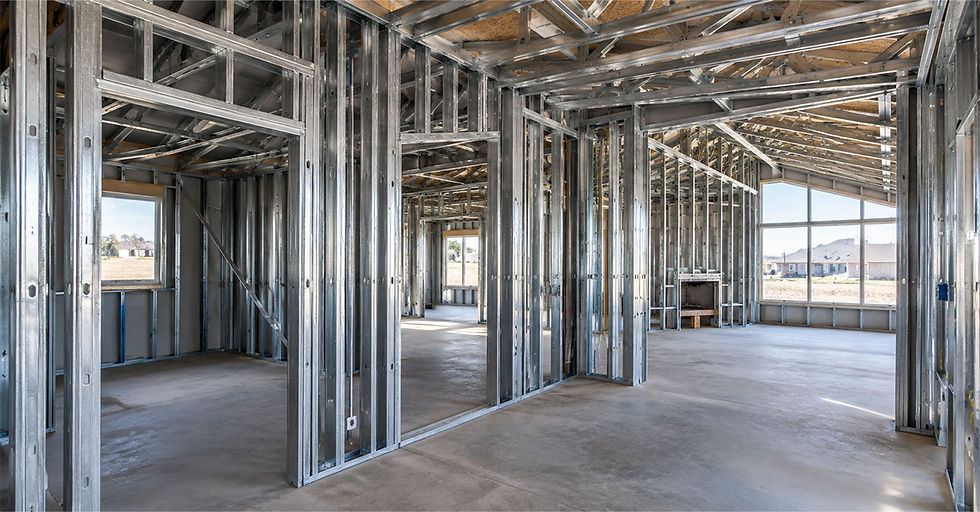
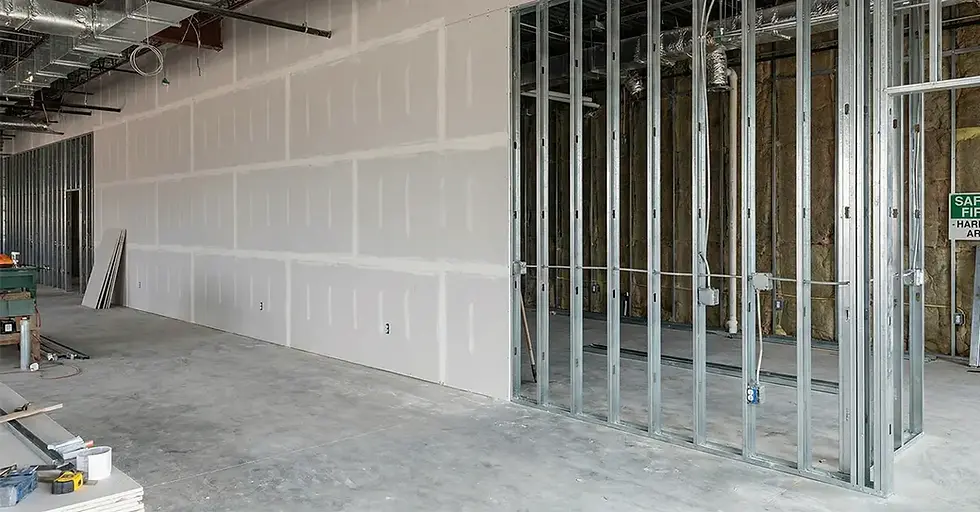
Steel studs are framing components made from cold-formed galvanized steel. They are commonly used in drywall framing, interior partitions, and light structural applications.
Steel studs are designed to provide a strong and stable framework for drywall and other wall materials while maintaining consistent dimensions and high durability.
What Are Wood Studs?
Wood studs are traditional framing elements typically made from softwood lumber. They are widely used in residential buildings because wood has historically been easy to work with and readily available.
However, wood framing also has several limitations related to moisture, fire resistance, and long-term stability.
Steel Studs vs Wood Studs: Key Differences
Strength and Durability
Steel studs offer excellent strength-to-weight performance and maintain their structural integrity over time.
Wood studs, on the other hand, can weaken due to environmental factors such as moisture, insects, and temperature changes.
Fire Resistance
One of the biggest advantages of steel framing is that steel is non-combustible.
Wood studs are naturally combustible and can contribute to fire spread in a building, making steel a safer option for many construction projects.
Dimensional Stability
Steel studs are manufactured with precise and consistent dimensions, ensuring straight walls and accurate framing.
Wood studs may warp, shrink, twist, or crack due to humidity and environmental changes, which can affect the quality of the finished structure.
Resistance to Mold and Moisture
Steel does not absorb moisture and is resistant to mold and mildew.
Wood studs can absorb water, which may lead to mold growth, rot, and structural deterioration over time.
Pest Resistance
Steel studs are 100% resistant to termites and other wood-destroying insects, a major advantage in many regions.
Wood framing systems can be vulnerable to pest damage if not properly treated.
Sustainability and Recycling
Steel is one of the most recyclable materials in the world, making it an environmentally responsible construction material.
While wood is renewable, wood framing often produces more on-site waste and may require replacement due to deterioration.
Feature | Steel Studs | Wood Studs |
Fire Resistance | Non-combustible | Combustible |
Pest Resistance | 100% resistant | Vulnerable |
Moisture Resistance | High | Low |
Why Builders Are Switching to Steel Framing
Because of these advantages, many builders and contractors are choosing steel framing systems for both interior and exterior applications.
Steel studs provide:
Higher durability
Superior fire resistance
Greater dimensional accuracy
Protection against pests and moisture
Long-term cost efficiency
Potentially lower insurance premiums due to steel’s non-combustible nature
These advantages make steel framing a reliable, cost-efficient, and modern solution for today’s construction projects.
High-Quality Steel Studs by UMS Metal
At UMS Metal, we manufacture galvanized steel drywall studs and tracks designed to deliver strength, precision, and long-term performance. If you're interested in learning more about the differences between steel and galvanized steel, you can also read our detailed guide on the topic.
Our steel framing components are produced in accordance with ASTM standards, ensuring consistent quality and reliability for construction projects.
If you are looking for durable and efficient framing solutions, we invite you to explore UMS Metal’s steel stud and track systems and discover the advantages of building with steel.